
Heatstroke in Pets: How to Recognise, Prevent, and Respond
Heatstroke in Pets: How to Recognise, Prevent, and Respond
Queensland’s heat and humidity causes a real risk of heat stroke in pets—one of the most serious and preventable emergencies. At MustCare Vet Centres in Brisbane and the Gold Coast, we treat heat stroke cases every summer, often in pets that were only outside or exercising for a short time.
Unlike humans, pets cannot sweat effectively. Once their body temperature rises too high, internal organs can begin to fail rapidly. Heat stroke can become fatal within minutes if not treated.
This guide explains the signs of heat stroke in dogs and cats, what to do immediately in Queensland’s climate, and when urgent veterinary care is essential—so you can act fast and protect your pet’s life.
| What to Know | In Short |
|---|---|
| Urgency | Heat stroke is a life-threatening emergency—seek vet care immediately |
| Early signs | Heavy panting, drooling, red gums, weakness |
| At-home first aid | Gentle cooling + transport to vet |
| Vet treatment | IV fluids, controlled cooling, oxygen |
| Outcome | Early care greatly improves survival |
Table of Contents
Heatstroke Red Flags - Act Immediately
Contact a vet NOW if your pet shows:
- Continuous heavy panting
- Vomiting or collapse
- Disorientation or seizures
- Gum colour changes (bright red, pale, or blue)
Heat stroke is a medical emergency. Do not wait—bring your pet to the nearest vet clinic immediately.
Common Causes of Heatstroke in Pets
Heat stroke occurs when a pet’s body temperature rises beyond safe limits and their cooling systems fail.
Most common causes include:
- Hot environments (direct sun, parked cars, enclosed sheds)
- Poor ventilation indoors
- Overexertion during warm weather
- High humidity reducing effective panting
- Lack of access to fresh water
High-risk pets include:
- Senior pets
- Brachycephalic breeds (e.g. Bulldogs, Persians)
- Overweight animals
- Pets with heart or lung disease
Signs and Symptoms (Dogs vs Cats)
Heat stroke symptoms can worsen rapidly—recognising the early signs and acting immediately can save your pet’s life.
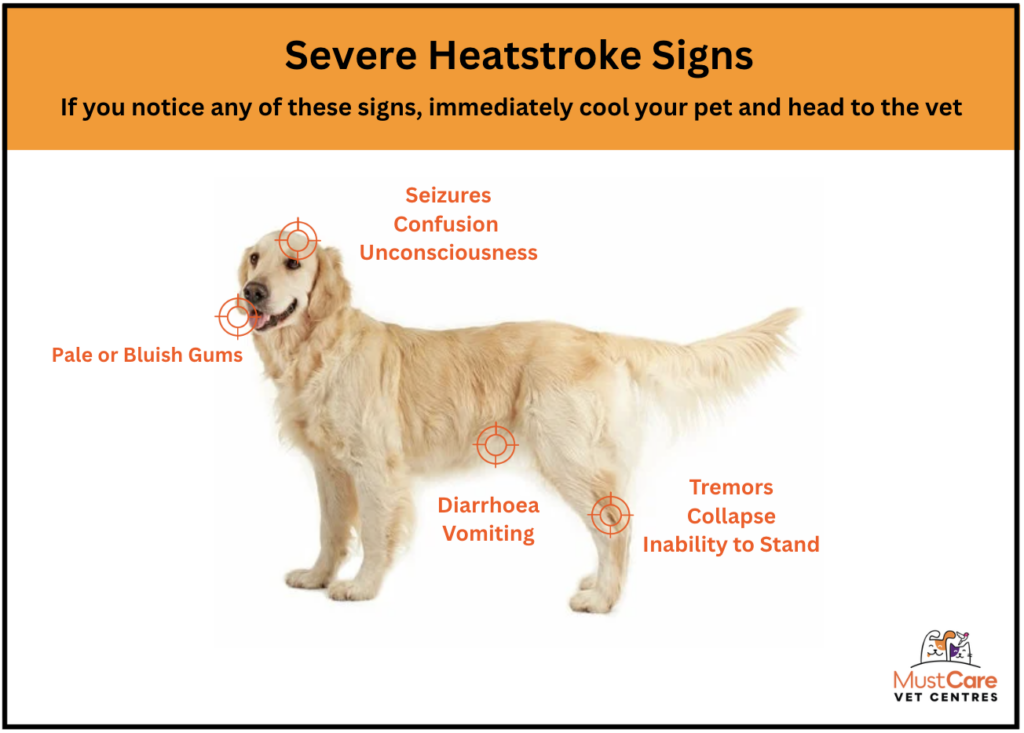
Signs of heat stroke in dogs:
- Excessive or continuous panting
- Drooling or thick saliva
- Bright red or pale gums
- Vomiting or diarrhoea
- Weakness, staggering, or collapse
- Seizures or unconsciousness
Signs of heat stroke in cats:
- Hiding or withdrawal
- Restlessness or agitation
- Excessive grooming
- Panting or open-mouth breathing
- Drooling or foamy saliva
- Collapse or seizures
Contact your vet immediately if you notice persistent panting, weakness, vomiting, collapse, or balance issues.
These are emergency signs—do not wait.

What to Do (and What Not to Do) When Your Pet has a Heatstroke
| DO | DON'T |
|---|---|
| Move pet to shade or air conditioning | Leave pet outdoors |
| Use cool (not icy) water for gentle cooling | Use ice baths |
| Offer small sips of water if conscious | Force water |
| Head to vet immediately | Prolong at-home monitoring and delay treatment |
How Your Vet Treats Heatstroke
At MustCare Vet Centres, heat stroke treatment is based on how serious your pet’s condition is. Because overheating can continue to damage organs even after cooling starts, professional care and close monitoring are essential.
Typical treatment steps include:
- Examination and temperature checks
Your vet assesses body temperature, breathing, heart rate, and gum colour to gauge severity. - Controlled cooling
Your pet is cooled gradually using safe methods to lower their temperature without causing shock. - Intravenous (IV) fluids
Fluids help rehydrate your pet, support circulation, and protect vital organs. - Oxygen therapy (if needed)
Oxygen may be given if your pet is struggling to breathe or appears distressed. - Blood and urine tests
These check for dehydration, organ damage, and electrolyte imbalances. - Medications (if required)
Used to manage nausea, seizures, inflammation, or other complications.
Recovery and Recheck Timeline
- Mild cases:
Many pets improve within 24–72 hours, but a follow-up visit is recommended. - Severe cases:
Hospitalisation and follow-up blood tests may be needed over several days.
Why Prompt Vet Care Matters
Even if your pet seems better after cooling, internal organ damage can still develop. Early veterinary treatment gives your pet the best chance of a full recovery.
Prevention of Heatstroke and Follow-up Care
Daily prevention tips:
- Keep pets indoors during peak heat
- Provide shade and ventilation
- Refresh water frequently
- Avoid midday walks
Exercise safety:
- Walk early morning or evening
- Stick to grass or shaded paths
Veterinary prevention:
- Regular senior health checks
- Weight management support
| Prevention Step | Why it Matters |
|---|---|
| Use vet recommended tick preventatives year-round | Some products protect for only 4-6 weeks |
| Daily tick checks | There is no 'tick season' - check all year round even treated pets can still be bitten |
| Keep grass short | Reduces habitat for ticks |
| Book an annual health check | Get tailored tick prevention advice for your dog or cat, in your area |
FAQ About Heatstroke in Pets
What to do if a pet has heat stroke?
If you suspect heat stroke, act immediately:
Move your pet to a cool, shaded or air-conditioned area.
Begin gentle cooling using cool (not icy) water.
Offer small sips of water if your pet is conscious.
Head to your vet immediately.
Continue monitoring breathing and responsiveness.
Heat stroke is a medical emergency and requires urgent veterinary care.
How to tell if your dog had a heatstroke?
If your dog shows collapse, seizures, disorientation, or weakness during hot weather, heat stroke should be suspected and urgent veterinary care is required.
How long will heat stroke last in a dog?
Recovery depends on severity and how quickly veterinary treatment begins which is why it's essential to act quickly:
Mild cases: 24–72 hours
Severe cases: May require hospitalisation and follow-up testing over several days
Even if your dog appears better, internal organ damage can still occur.
Can I pour water on my dog to cool him down?
Yes—cool (not icy) water can be used for gentle cooling.
Avoid ice baths or very cold water, as sudden cooling can be dangerous.
How hot is too hot for pets in Australia?
Temperatures above 26–27°C, especially with humidity, increase the risk of heat stroke—particularly in Queensland conditions.
How MustCare Vets Can Help
MustCare Vet Centres provide emergency heat stroke treatment for pets across Brisbane and the Gold Coast, including Algester, Mt Gravatt, Compton Road, and Windaroo.
Related Articles You Might Like
Why Desex Your Cat? Desexing (spaying for females, castration for males) is one of the most important health decisions you can make for your cat. Beyond preventing unwanted litters, desexing provides significant health and behavioural benefits that can extend your cat’s life and improve their quality of living. Health Benefits of Desexing Cats Female Cats…
Why Are Dog Vaccinations Important? Vaccinations are one of the most effective ways to protect your dog from serious and potentially fatal diseases. In Australia, several deadly canine diseases including parvovirus, distemper, and canine hepatitis can be prevented through a simple vaccination program. At MustCare Vet Centres, we see the devastating effects of preventable diseases…