Cat Ear Cleaning Guide: Safely Clean Your Cat’s Ears

Many cat owners worry about whether it’s safe to clean their cat’s ears — and how to do it without hurting them. At MustCare Vet Centres across Brisbane’s south, we treat ear issues every week, often caused by wax build-up, allergies, mites, or infection. A gentle cat ear cleaning routine at home can help, but only when it’s done correctly and at the right time.

This guide explains when to clean, how to clean safely, which products to avoid, and when it’s best to book a veterinary check-up.

What to KnowIn Short
UrgencySee a vet if redness, smell, or dark discharge appears
At-home careUse only a vet-approved cat ear cleaner; wipe visible debris only
Don’t doNo cotton buds, alcohol, vinegar, olive oil, or peroxide
Vet treatmentEar exam, cytology, deep clean, medication
OutcomeCats recover well with early treatment and proper care

Table of Contents

Common Causes of Cat Ear Problems

Cat ears are delicate and easily irritated, and understanding the cause helps determine whether simple cat ear cleaning at home is appropriate or whether a vet visit is needed.

1. Wax build-up

Some cats naturally produce more wax. Excess wax traps debris, moisture, and yeast.

2. Ear mites

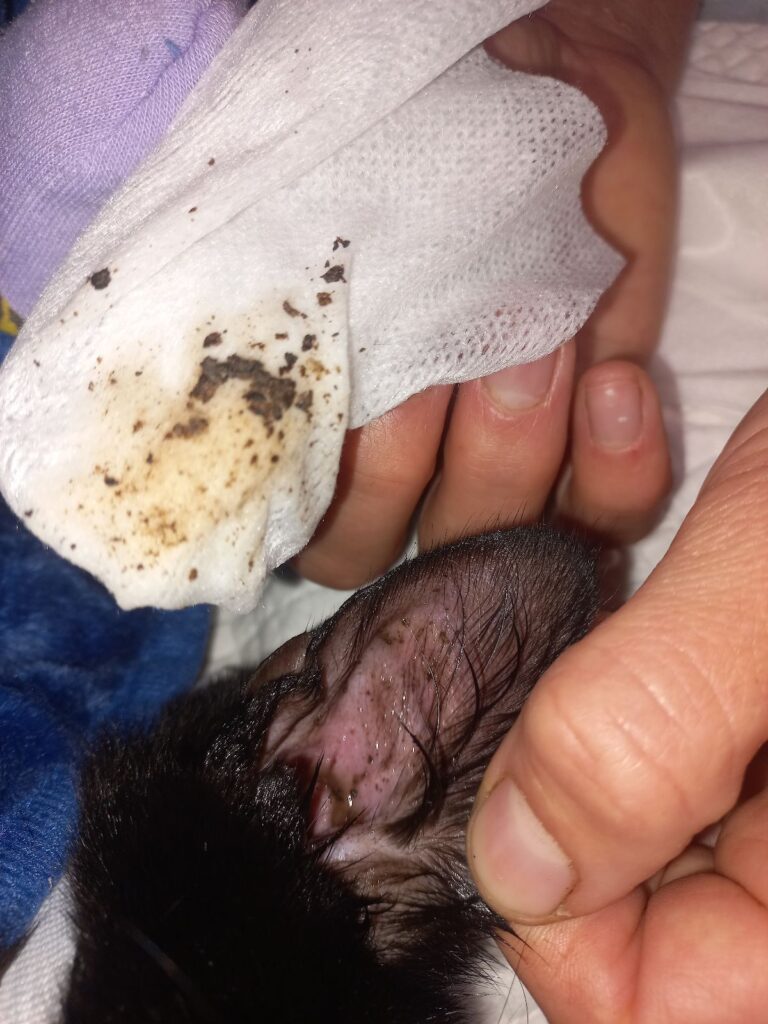
Very common in kittens and multi-cat homes. Mites cause intense itching and dark, crumbly “coffee-ground” debris.

3. Allergies

Food or environmental allergies can lead to chronic inflammation inside the ear canal.

4. Yeast or bacterial infection

These often cause odour, redness, and discharge — and should not be cleaned at home until after a vet exam.

5. Foreign bodies

Dirt, dust, or grass seeds may lodge in the ear, especially in adventurous or outdoor cats.

Signs and Symptoms of Ear Issues

You might notice:

Scratching or pawing at the ears

Head shaking

Redness or swelling

Visible wax or debris

Odour coming from the ear

Dark, crumbly discharge (possible mites)

Sensitivity or crying when touched

When to book:
If you see redness, swelling, strong odor, discharge, or persistent scratching, pause cat ear cleaning and book a same-day appointment at MustCare Vets.

Cat ear cleaning showing dark, crumbly debris typical of ear mites being wiped away with a cloth.
A cat’s ear being gently cleaned to remove dark, coffee-ground debris commonly seen with ear mites.

What to Do (and What Not to Do) When Your Cleaning Your Cat's Ears

DoDon't
Use a vet-approved cat ear cleanerUse water, vinegar, olive oil, peroxide, or alcohol
Gently wipe the outer ear onlyInsert cotton buds into the canal
Massage the ear base to loosen debrisOver-clean; it causes irritation
Observe your cat for 24–48 hoursClean if your cat shows signs of infection
Keep your cat calm with treatsForce or restrain aggressively

Step-by-Step: How to Safely Clean Your Cat's Ears

Follow this cat ear cleaning method when your cat has mild wax or dirt and no signs of infections:

1. Prepare your supplies

Gather a vet-approved cat ear cleaner, cotton pads or gauze, and treats. Avoid cotton buds.

2. Create a calm environment

Choose a quiet room. Having someone gently hold your cat can help prevent sudden movements.

3. Examine the ears first

Look for redness, swelling, foul smell, pus, or heavy dark debris — these require a vet visit before cleaning.

4. Apply the cleaner correctly

Place the tip just at the ear opening. Squeeze in the recommended amount. Never push the applicator into the canal.

5. Massage the ear base

Massage gently for 20–30 seconds. This loosens wax and debris.

6. Let your cat shake

Shaking helps the loosened material move outward.

7. Wipe only the visible area

Use cotton pads to clean the outer folds. Never insert anything deep into the ear canal.

8. Reward your cat

Positive reinforcement helps make future cleaning easier.

Safety Reminder:

If your cat reacts with sudden pain, cries out, or aggressively resists, stop immediately and consult your vet.

Vet-Approved vs DIY Cat Ear Cleaners

Cat ears are sensitive, and the wrong products can cause burns, irritation, or infections.

Vet-Approved Cat Ear Cleaners

Formulated specifically for cats with the correct pH and gentle ingredients. Often include:

  • Antimicrobial agents
  • Drying agents
  • Soothing ingredients like aloe
  • Safe surfactants to break down wax

Safe to use if your cat’s ears only have mild wax or dirt.

IngredientWhy to Avoid
Olive OilTraps moisture and worsens infections
VinegarBurns inflamed tissue
Hydrogen PeroxideDamages healthy skin and delays healing
AlcoholPainful and drying; stings inflamed tissue
WaterEncourages yeast and bacteria to grow

If you’re unsure which cat ear cleaner is safe, ask our team before using anything.

How Your Vet Treats Ear Problems

If your cat’s ears show signs of infection, mites, or severe irritation, a vet visit is essential as at-home ear cleaning will not work. 

1. Otoscopic examination

Your vet checks the canal, eardrum, and overall health of the ear.

2. Cytology (microscope test)

A swab of the ear helps identify yeast, bacteria, or mites so treatment is accurate.

3. Professional cleaning

If needed, your vet will flush and clean the canal safely.

4. Medication

May include:

Anti-inflammatory drops

Antibiotic drops

Antifungal medication

Mite treatment

Pain relief

Allergy management

5. Recheck

Ensures the infection fully resolves and prevents long-term damage.

Prevention and Follow-up Care

Most cats only need occasional ear cleaning, but regular ear checks, parasite control, and allergy management help prevent problems from developing. 

Regular ear checks

  • Look inside once a week for dirt, redness, or odour.

Use cleaners only when needed

  • Over-cleaning can cause irritation; monthly cleaning is enough for most cats.

Parasite control

  • Regular flea and mite prevention helps reduce the risk of ear mites.

Allergy management

  • If your cat has chronic ear issues, your vet may recommend food trials or allergy testing.

Calm environment

  • Stress reduction helps keep your cat cooperative during grooming and improves overall ear health.

FAQs About Cat Ear Cleaning

How can I clean my cat's ears at home?

You can clean your cat’s ears at home by using a vet-approved cat ear cleaning solution, gently applying it to the ear canal, massaging the base of the ear for 20–30 seconds, allowing your cat to shake out loosened debris, and then wiping only the visible outer folds with cotton pads or gauze. Do not use cotton buds or insert anything deep into the ear canal.

Are cat's ears supposed to be cleaned?

Yes — but only when needed. Cats are good self-groomers, but dirt, wax, and debris can still build up. Monthly cleaning works for most cats, but cleaning should never be done if there are signs of infection, redness, swelling, or strong odour.

What is the black stuff in my cat's ears?

Black, crumbly “coffee-ground” debris often indicates ear mites, especially if your cat is scratching and shaking their head. This requires a veterinary cytology test and mite treatment.

Why does my cat have brown gunk in his ears?

Brown gunk is usually wax, which can build up naturally — but it may also be linked to allergies, yeast, or early infection. If your cat shows redness, pain, or odour, cleaning at home should be stopped until a vet examines the ear.

How do I tell if my cat has ear mites or just dirty ears?

You can tell the difference between ear mites and simple dirty ears by looking at the type of debris and your cat’s behaviour. Ear mites usually cause dark, coffee-ground debris, intense itching, frequent head shaking, and crumbly black or brown material inside the ear. In contrast, dirty ears or normal wax build-up tend to produce yellow or light-brown wax, a mild odour, and only minimal scratching. If you’re unsure, a vet can confirm ear mites with a quick cytology test.

Can I use baby wipes to clean my cat's ears?

No. Baby wipes are not safe for ear canals. They contain fragrances and chemicals that can irritate delicate ear tissue. Use only a vet-approved cat ear cleaner and cotton pads.

What is the best cat ear cleaning solution?

The best option is a vet-approved cat ear cleaner formulated specifically for cats. These cleaners have the right pH, safe surfactants, and gentle ingredients. Household products such as olive oil, vinegar, alcohol, or peroxide should never be used.

How MustCare Vets Can Help

MustCare Vet Centres provide professional cat ear examinations, mite treatment, and ear infection care across Brisbane’s southern suburbs, including Algester, Underwood, Compton Road, Mt Gravatt, and Windaroo. We offer safe cleaning, cytology testing, and tailored treatment plans for cats of all ages.

Keep your cat comfortable and healthy with professional ear care at Mustcare Vets.

Related Articles You Might Like

Itchy Dog? Why Is My Dog Scratching So Much?

Pet Lumps and Bumps: When to Worry and What to Do

Autumn Allergies in Pets: What’s Normal and What’s Not?