
Best Dog Food in Australia: A Vet’s Complete Guide to Choosing the Right Diet
Looking for the best dog food in Australia? Our veterinarians compare the top brands, explain how to read dog food labels, discuss grain-free diets, and help you choose the right food for your dog’s age, breed and health.
With so many dog food brands available in Australia, choosing the right one can be overwhelming. The comparison table below highlights some of the most popular options – including premium veterinary diets, Australian-made favourites and supermarket brands – to help you compare their features and find the best fit for your dog’s age, lifestyle and nutritional needs.
Remember: There isn’t one “best” dog food for every dog. Age, breed, activity level, allergies, medical conditions and even taste preferences all play an important role in choosing the right diet. If you’re unsure which food is best for your dog, your veterinarian can recommend a diet tailored to their individual health and nutritional needs.
| Brand | Best For | Life Stage | Australian Made | Grain-Free Option | Approx. Price | Our Thoughts |
|---|---|---|---|---|---|---|
| Hill's Science Diet | Dogs needing scientifically formulated nutrition | Puppy, Adult, Senior | ❌ | Limited | $$$$ | Excellent research backing and commonly recommended by veterinarians. |
| Royal Canin | Breed-specific and prescription diets | Puppy, Adult, Senior | ❌ | Limited | $$$$ | Wide range of specialised diets backed by extensive nutritional research. |
| Advance | Everyday nutrition for most dogs | Puppy, Adult, Senior | ✅ | Some | $$$ | Australian-made with strong veterinary support and quality ingredients. |
| Black Hawk | Healthy active dogs | Puppy, Adult, Senior | ✅ | Yes | $$$ | Uses quality Australian ingredients and offers grain-inclusive and grain-free options. |
| Ivory Coat | Natural ingredient diets | Puppy, Adult, Senior | ✅ | Yes | $$$ | Australian-made with meat-first recipes and no artificial colours or flavours. |
| Meals for Mutts | Sensitive stomachs and food intolerances | Puppy, Adult, Senior | ✅ | Yes | $$$ | Popular for dogs with allergies thanks to single-protein recipes. |
| Prime100 | Dogs with allergies or medical conditions | Adult, Senior | ✅ | Yes | $$$$ | Often recommended by vets for elimination diets and food sensitivities. |
| Purina Pro Plan | Sporting and working dogs | Puppy, Adult, Senior | ❌ | Limited | $$$$ | High-quality nutrition with strong scientific research behind the formulas. |
| Eukanuba | Large breeds and active dogs | Puppy, Adult, Senior | ❌ | No | $$$ | Excellent joint support and digestibility for larger dogs. |
| SavourLife | Budget-conscious owners wanting quality | Puppy, Adult, Senior | ✅ | Some | $$ | Australian company with quality ingredients and supports rescue organisations. |
| Lyka | Fresh food diets | Adult | ✅ | Fresh food | $$$$$ | Freshly prepared meals with customised feeding plans delivered to your door. |
| Ziwi Peak | Premium air-dried nutrition | All life stages | ❌ (New Zealand) | Yes | $$$$$ | Extremely high meat content and minimal processing, but expensive. |
| Supercoat | Budget supermarket option | Puppy, Adult | ❌ | No | $ | Suitable for many healthy dogs, although ingredient quality is generally lower than premium brands. |
| Optimum | Mid-range supermarket food | Puppy, Adult, Senior | ❌ | No | $$ | Better ingredient profile than many supermarket brands and widely available. |
| Pedigree | Entry-level supermarket food | Puppy, Adult | ❌ | No | $ | Meets nutritional requirements for many dogs but generally contains more cereals and fillers than premium diets. |
Table of Contents
How To Choose The Best Dog Food for Your Dog
Choosing the best dog food can feel overwhelming. Walk into any pet store and you’ll find dozens of brands, each claiming to be the healthiest option for your dog.
The truth is there isn’t one “perfect” dog food for every dog.
The best diet depends on factors such as your dog’s age, breed, activity level, health conditions and individual nutritional requirements.
In this guide, we will review some of Australia’s most popular dog foods, explain what to look for on a nutrition label, and answer common questions to help you make an informed decision.
How We Evaluated These Dog Food Brands
With hundreds of dog food brands available in Australia, narrowing down the list isn’t easy. Rather than choosing the most expensive or heavily advertised products, we looked for brands that consistently meet recognised nutritional standards and have earned the trust of both veterinarians and pet owners.
When selecting the dog foods featured in this guide, we considered the following factors:
Nutritional Balance
A quality dog food should provide a balanced mix of protein, healthy fats, carbohydrates, vitamins and minerals to support your dog’s overall health at every life stage.
Meets Recognised Nutritional Standards
We prioritised foods manufactured to recognised quality and nutritional standards. In Australia, many reputable brands follow the Australian Standard for the Manufacturing and Marketing of Pet Food (AS 5812) and formulate their diets to meet internationally recognised nutritional guidelines established by AAFCO or FEDIAF. Together, these standards help ensure a diet is complete, balanced and appropriate for your dog’s life stage.
Ingredient Quality
We looked for brands that use high-quality protein sources, avoid unnecessary fillers where possible, and include ingredients that support overall health. While every recipe is different, foods made with quality ingredients generally provide better nutrition and digestibility.
Availability in Australia
The best dog food isn’t much use if it’s difficult to buy. We focused on brands that are readily available through Australian veterinary clinics, pet stores and reputable retailers, making them accessible for most dog owners.
Reputation and Veterinary Acceptance
Finally, we considered each brand’s reputation within the veterinary industry, its history of quality control and safety, and its popularity among Australian pet owners. While no single brand is perfect for every dog, these products have established themselves as reliable options for a wide range of nutritional needs.
Please note: This article is intended as a general guide and is not a substitute for personalised veterinary advice. Every dog has unique nutritional requirements based on factors such as age, breed, activity level and existing health conditions. If you’re unsure which diet is right for your dog, speak with your veterinarian for tailored recommendations.
Which Dog Food Is Right For Your Dog?
Your dog’s age, size, activity level and health needs all influence which food may suit them best. The table below provides a quick starting point, but dogs with allergies, digestive issues or medical conditions should have their diet discussed with a veterinarian before making changes.
| If your dog is... | Consider looking at... |
|---|---|
| A growing puppy | Hill's Science Diet Puppy, Royal Canin Puppy, Advance Puppy |
| A senior dog | Hill's Senior, Advance Mature, Royal Canin Ageing |
| A large breed | Hill's Large Breed, Eukanuba Large Breed, Advance Large Breed |
| A small breed | Royal Canin Mini, Advance Small Breed |
| Overweight | Hill's Perfect Weight, Royal Canin Satiety (vet diet), Advance Healthy Weight |
| Sensitive stomach | Meals for Mutts, Prime100, Hill's Sensitive Stomach & Skin |
| Food allergies | Prime100, Meals for Mutts, prescription veterinary diets |
| Very active or working | Purina Pro Plan Performance, Eukanuba, Black Hawk Working Dog |
How to Read a Dog Food Label
Choosing the best dog food isn’t just about picking a well-known brand. Understanding what’s on the label can help you make a more informed decision and compare products with confidence.
Protein Content
Protein is essential for building and maintaining muscle, supporting the immune system and helping your dog stay healthy throughout life. While a higher protein percentage isn’t always better, the protein should come from quality animal sources and be appropriate for your dog’s age and activity level.
Growing puppies, active dogs and working breeds generally require more protein than less active adult dogs.
Check the Ingredients List
Ingredients are listed in descending order by weight before cooking. Ideally, you’ll want to see a named animal protein – such as chicken, beef, lamb or salmon – listed near the top of the ingredient list.
Don’t be alarmed by ingredients such as chicken meal or fish meal. Despite the name, these are concentrated sources of high-quality protein and are commonly used in premium dog foods.
Look for a Complete and Balanced Diet
The label should indicate that the food is complete and balanced for your dog’s life stage. Many reputable brands available in Australia formulate their diets to meet recognised nutritional standards, such as AAFCO or FEDIAF guidelines, ensuring your dog receives all the essential nutrients they need without additional supplementation.
Check the Life Stage
Dogs have different nutritional needs throughout their lives. Always choose a food that matches your dog’s current life stage, such as:
- Puppy
- Adult
- Senior
- All Life Stages
Large-breed puppies also benefit from specially formulated diets that help support healthy bone and joint development.
Understand the Guaranteed Analysis
The Guaranteed Analysis outlines the minimum or maximum amounts of key nutrients, including:
- Crude protein
- Crude fat
- Fibre
- Moisture
These values provide a useful comparison between foods, but they don’t tell the whole story. The quality and digestibility of the ingredients are just as important as the percentages listed on the label.
Don’t Forget Calories
Some dog foods contain significantly more calories than others. Feeding the recommended volume of a high-calorie food can easily contribute to unwanted weight gain, particularly in less active dogs.
If your dog needs to lose weight or maintain a healthy body condition, ask your veterinarian to help calculate the appropriate daily calorie intake.

Dry Dog Food vs Wet Dog Food
One of the most common questions veterinarians are asked is whether dry or wet food is better. The answer depends on your dog’s individual needs, lifestyle and preferences.
| Dry Dog Food | Wet Dog Food |
|---|---|
| Longer shelf life | Higher moisture content |
| Generally more affordable | Often more palatable for fussy eaters |
| Convenient to store and feed | Easier for dogs with dental disease or missing teeth |
| May provide some mechanical cleaning during chewing | Can help increase water intake |
| Wide range of formulations available | Usually more expensive per meal |
Dry Dog Food May Be Best If…
- Your dog has healthy teeth.
- You want a convenient and economical feeding option.
- Your dog enjoys chewing kibble.
- You’re feeding a large breed where cost is an important consideration.
Wet Dog Food May Be Best If…
- Your dog has poor appetite.
- They have dental disease or difficulty chewing.
- They require additional water intake.
- You’re trying to encourage an older or recovering dog to eat.
Can You Feed Both?
Absolutely. Many owners successfully feed a combination of wet and dry food. This can provide variety, improve palatability and increase water intake while still delivering complete and balanced nutrition.

Grain-Free vs Grain-Inclusive Dog Food
Grain-free diets have become increasingly popular over recent years, but they aren’t necessarily healthier for every dog.
Despite common misconceptions, grains such as rice, oats and barley are nutritious ingredients that provide carbohydrates, fibre, vitamins and minerals. For most healthy dogs, grains are not harmful and can form part of a well-balanced diet.
When Is Grain-Free Appropriate?
A grain-free diet may be recommended if your dog has been diagnosed with a specific food allergy or intolerance. However, true grain allergies are relatively uncommon, and many food allergies are actually caused by proteins such as beef or chicken rather than grains.
If your dog has ongoing skin problems, digestive issues or suspected food allergies, your veterinarian may recommend a supervised elimination diet to identify the underlying cause.
Current Research
Current research suggests that some non-traditional diets — many of which are grain-free and contain high levels of legumes such as peas and lentils — may be associated with an increased risk of diet-associated dilated cardiomyopathy (DCM) in some dogs. However, researchers have not established that the absence of grains is the cause, and the relationship appears to be more complex than simply feeding a grain-free diet. If you’re considering a grain-free diet, particularly for long-term feeding, speak with your veterinarian to ensure it’s appropriate for your dog’s individual needs.
Should You Choose Grain-Free?
For most healthy dogs, there is no evidence that grain-free diets provide additional health benefits over high-quality grain-inclusive diets. Unless your veterinarian has diagnosed a medical reason to avoid grains, the focus should be on choosing a complete, balanced diet that meets your dog’s individual nutritional needs.
Veterinary Tip: If you’re considering changing your dog’s diet — particularly if they have allergies, digestive problems or an existing medical condition — speak with your veterinarian first. They can help you choose a diet that is evidence-based and appropriate for your dog’s age, breed and health status.

When Should You Change Your Dog's Food?
Most healthy dogs don’t need to change foods regularly. If your dog is maintaining a healthy weight, has good energy levels, produces consistent stools and enjoys eating their food, there’s usually no reason to switch.
However, there are times when changing your dog’s diet may be beneficial or medically necessary.
You may need to consider a new food if your dog:
- Is transitioning from puppy to adult or senior food.
- Needs to lose or gain weight.
- Has developed a food allergy or intolerance.
- Experiences ongoing digestive upset.
- Has been diagnosed with a medical condition requiring a prescription diet.
- Has become less active or significantly more active.
- Has become reluctant to eat their current food.
- Is pregnant or nursing.
If your dog is experiencing persistent vomiting, diarrhoea, weight loss, itchy skin or changes in appetite, it’s important to speak with your veterinarian before changing their diet. These signs may indicate an underlying medical condition rather than simply needing a different food.
How to Transition Your Dog to a New Food
Changing your dog’s food too quickly can lead to digestive upset, including vomiting, diarrhoea, excessive gas or a reduced appetite. Gradually introducing the new food allows your dog’s digestive system and gut bacteria time to adapt, helping make the transition as smooth as possible.
For most healthy dogs, a gradual transition over seven days is recommended.
If your dog has a particularly sensitive stomach or develops mild digestive upset during the transition, consider extending the process over 10 to 14 days. If vomiting, persistent diarrhoea or refusal to eat occurs, stop the transition and contact your veterinarian for advice.
| Day | Current Food | New Food |
|---|---|---|
| Days 1–2 | 75% | 25% |
| Days 3–4 | 50% | 50% |
| Days 5–6 | 25% | 75% |
| Day 7 onwards | 0% | 100% |
What to Monitor During the Transition
A new diet should support your dog’s overall health, not just fill their bowl. During the first few weeks, monitor how your dog responds to the new food.
Positive signs include:
- Firm, consistent stools.
- A healthy appetite.
- Good energy levels.
- A shiny, healthy coat.
- Healthy skin without increased itching.
- Maintaining an appropriate body weight.
Some mild digestive changes can occur during the first few days, but these should settle as your dog adjusts.
When to Contact Your Veterinarian
Contact your veterinarian if your dog experiences any of the following after changing foods:
- Persistent vomiting.
- Diarrhoea lasting more than 24 to 48 hours.
- Blood in the stool.
- Refusing food for more than 24 hours.
- Marked lethargy.
- Rapid weight loss.
- Severe itching or skin irritation.
These signs may indicate an underlying illness, a food intolerance or that a different diet may be more appropriate.
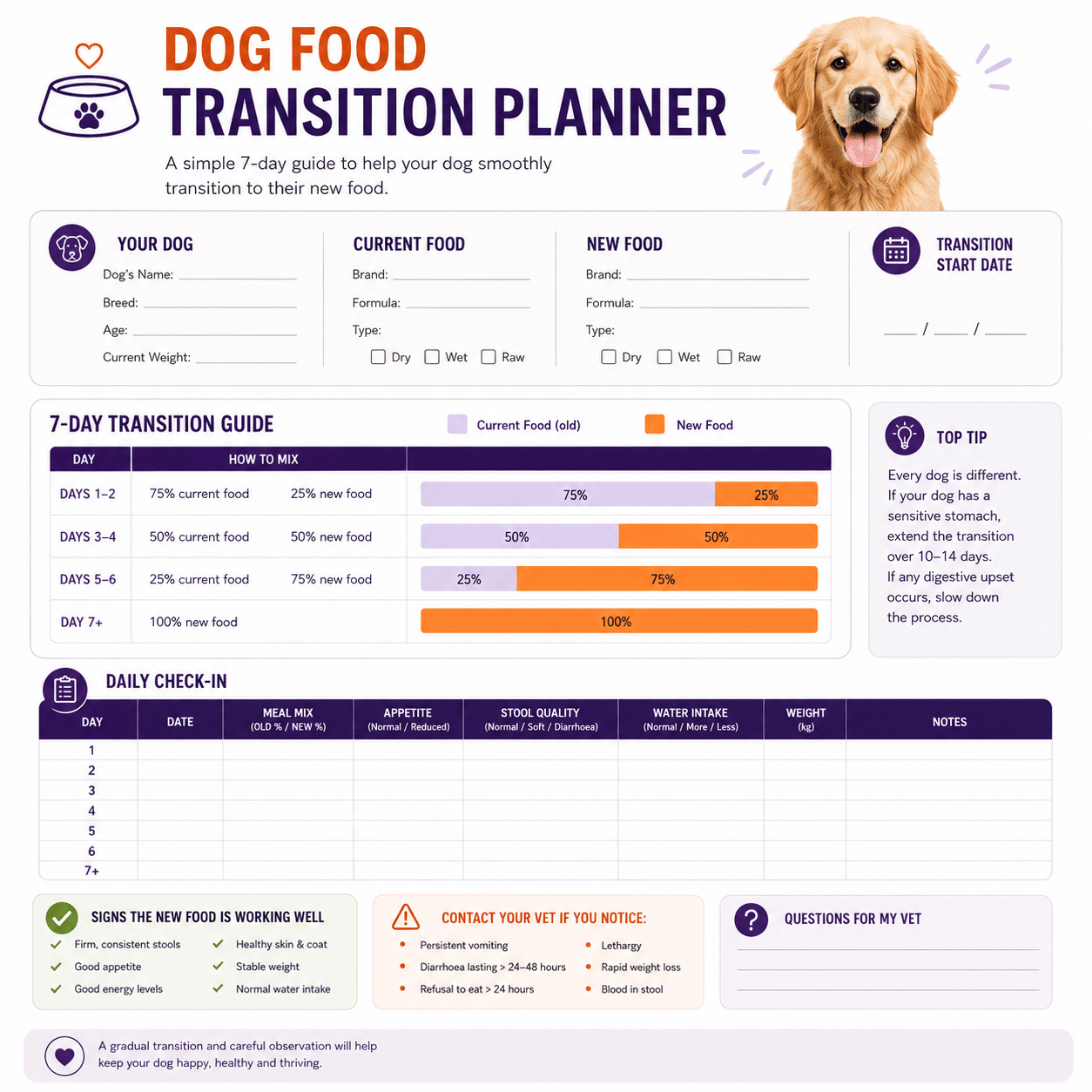
Download Your Free Dog Food Transition Planner
Changing your dog’s diet doesn’t have to be confusing. To help make the process easier, we’ve created a free printable Dog Food Transition Planner that you can keep on your fridge.
The planner includes:
- Your dog’s details and starting weight.
- A simple seven-day food transition schedule.
- Daily feeding tracker.
- Water intake monitor.
- Weight tracker.
- Stool and appetite observations.
- Space to record questions for your veterinarian.
A gradual transition, combined with careful observation, gives your dog the best chance of adapting comfortably to their new diet while helping you identify any concerns early.
Frequently Asked Questions About Dog Food
We’ve answered some of the most frequently searched questions about dog food in Australia, from choosing between dry and wet food to understanding grain-free diets, food allergies and how much to feed your dog. If you can’t find the answer you’re looking for, our veterinary team is always happy to help.
What is the best dog food in Australia?
There isn't one dog food that's best for every dog. The right choice depends on your dog's age, breed, activity level, size and any underlying health conditions. Look for a complete and balanced diet from a reputable manufacturer that is appropriate for your dog's life stage. If you're unsure, your veterinarian can recommend the most suitable option.
Is grain-free dog food better?
Not necessarily. For most healthy dogs, there is no evidence that grain-free diets are healthier than grain-inclusive diets. Grain-free diets may be appropriate for dogs with specific dietary sensitivities, but they should only be chosen under veterinary guidance.
Should dogs eat dry food or wet food?
Both dry and wet food can provide complete and balanced nutrition. Dry food is generally more affordable and convenient, while wet food can increase water intake and may be more appealing to fussy eaters. Many dogs thrive on a combination of both.
How often should I feed my dog?
Most adult dogs do well on two meals per day, while puppies usually require three to four smaller meals depending on their age. Your veterinarian can recommend an appropriate feeding schedule based on your dog's life stage and individual needs.
How much should I feed my dog?
The amount depends on your dog's weight, age, activity level and the calorie density of the food you're feeding. Feeding guides on the packaging provide a starting point, but they often need adjusting to help maintain a healthy body condition.
What ingredients should I look for in dog food?
Choose foods that contain a quality animal protein source, are complete and balanced for your dog's life stage, and are manufactured by reputable companies with strong quality control. Ingredient quality and nutritional balance are more important than marketing claims on the front of the bag.
Are supermarket dog foods good enough?
Some supermarket brands provide complete and balanced nutrition, while others may offer fewer specialised options than premium brands. Rather than judging a food solely by where it's sold, focus on whether it meets recognised nutritional standards and suits your dog's individual needs.
Is raw feeding better than commercial dog food?
Raw diets remain a controversial topic. While some owners choose to feed raw diets, they can carry risks including nutritional imbalance and bacterial contamination if they are not carefully formulated and handled. If you're considering feeding a raw diet, speak with your veterinarian or a qualified veterinary nutritionist first.
How do I know if my dog is allergic to their food?
Food allergies may cause itchy skin, recurring ear infections, excessive licking, vomiting or diarrhoea. However, these signs can also have many other causes. Your veterinarian may recommend an elimination diet trial to accurately diagnose a food allergy.
How do I change my dog's food safely?
Transition gradually over 7–10 days by slowly increasing the proportion of the new food while reducing the old food. A gradual change helps minimise digestive upset and gives your dog time to adjust.
Is expensive dog food always better?
Not always. While premium brands often invest heavily in nutritional research and quality control, the most expensive food isn't automatically the best choice for every dog. The ideal diet is one that is complete, balanced and appropriate for your dog's age, health and lifestyle.
Can I feed my dog homemade food?
Homemade diets can work, but they must be carefully formulated to ensure they provide all the nutrients your dog needs. Feeding an unbalanced homemade diet over time can lead to nutritional deficiencies. Always seek advice from your veterinarian or a veterinary nutritionist before switching to a homemade diet.
How can I tell if my dog food is high quality?
Look for a food that:
Is complete and balanced for your dog's life stage.
Contains a named animal protein source.
Is made by a reputable manufacturer with strong quality control.
Provides clear feeding guidelines and nutritional information.
Is recommended by your veterinarian where appropriate.
How often should I change my dog's food?
Healthy dogs generally don't need regular changes in diet if they're thriving on their current food. Frequent switching can upset some dogs' digestive systems. Only change foods if there's a medical reason, your dog's nutritional needs change, or your veterinarian recommends a different diet.
When should I speak to my veterinarian about my dog's diet?
Book a veterinary appointment if your dog experiences ongoing vomiting, diarrhoea, weight loss, excessive weight gain, poor appetite, itchy skin, chronic ear infections, or if you're unsure whether they're receiving the right nutrition. Your veterinarian can recommend a diet tailored to your dog's health, age and lifestyle.
Our Veterinarians Can Discuss Your Dog's Nutritional Needs With You
Choosing the right food is one of the best things you can do for your dog’s long-term health, but with so many options available, it can be difficult to know where to start. Our experienced veterinarians can help you choose a diet that’s tailored to your dog’s age, breed, lifestyle and any existing health conditions, ensuring they receive the nutrition they need to thrive.
MustCare Vet Centres proudly care for dogs and their families across Brisbane’s southern suburbs, with conveniently located clinics in Algester, Mt Gravatt, Compton Road and Windaroo. Whether you’re choosing your puppy’s first food, managing a food allergy, supporting healthy weight loss or looking for advice on prescription diets, our team is here to help.
If you’d like personalised nutrition advice or have questions about your dog’s diet, we’d love to help. Book an appointment with one of our veterinarians and we’ll work with you to develop a feeding plan that’s right for your dog.
Related Articles You Might Like
Why Are Dog Vaccinations Important? Vaccinations are one of the most effective ways to protect your dog from serious and potentially fatal diseases. In Australia, several deadly canine diseases including parvovirus, distemper, and canine hepatitis can be prevented through a simple vaccination program. At MustCare Vet Centres, we see the devastating effects of preventable diseases…
When Is Tick Season in Queensland? Unlike southern states where tick activity is seasonal, paralysis ticks are active year-round in South East Queensland. However, tick numbers surge dramatically during the warmer, humid months, making certain times of year particularly dangerous for pets in the Brisbane, Logan, and Gold Coast areas. Understanding the tick calendar helps…